


What is the BAT Test?
BAT test (Basophil Activation Test) is an advanced diagnostic test that evaluates immediate-type allergic reactions by analyzing the activation of basophils, a type of white blood cell, in the blood. It uses flow cytometry to measure markers of activation after exposure of basophils to allergens.
Unlike traditional IgE tests, which measure allergen-specific IgE (sIgE) levels, the BAT test can improve diagnosis by assessing whether sIgE actually causes cell activation after allergen exposure. It is ideal for difficult cases where IgE tests are inconclusive.
The BAT test is offered by highly specialized centers, due to the need for rapid sample processing, specialized flow cytometry equipment and experienced personnel. StArtBio diagnostic centers have many years of experience with the BAT test, with highly trained molecular biologists both in the processing of BAT samples and in the interpretation of results, and are accredited by the Greek National Accreditation System for this specific test.
Which Allergens Are Tested by the BAT Test?
The BAT test can be performed on various allergens, such as:
Drugs:
- Antibiotics (e.g. penicillin, cefuroxime, amoxicillin)
- Analgesics (e.g. aspirin, ibuprofen)
- Muscle relaxants (e.g. cisatracurium, propofol)
- Local Anesthetics (e.g. articaine, lidocaine)
- Contrast Media (e.g. iobitridol, iodixanol)
- Proton Pump Inhibitors (e.g. omeprazole, esomeprazole)

Environmental Allergens:
- Insect poisons (e.g. bees, wasps)
- Inhaled allergens (e.g. pollen, mold, dust mites)
- Latex

Food Allergens:
- Nuts and Seeds
- Dairy and Eggs
- Fish and meat
- Fruits and Vegetables
- Cereal

See the full list of active drug ingredients here.*
*In case you want to test a substance that is not included in the list, contact us and we will let you know if our laboratory can test it.
When Should I do the BAT Test?
The BAT test is recommended when skin tests or IgE tests are inconclusive, particularly for:
- Allergies to medications, to confirm sensitivity before administration.
- Anaphylaxis of unknown etiology.
- Chronic Spontaneous Urticaria (CSU).
- Inhaled allergens.
- Food, before reintroduction, to avoid challenge
- Insect poisons.
Why do the BAT Test?
The BAT test offers:
- Accuracy: High specificity (sensitivity may vary in some cases).
- Small Sample: Requires a minimal amount of blood.
- Unaffected by most Medications*: Antihistamines do not affect results. *see requirements bellow
- Personalisation: Tests for rare or personalized allergens that are not available in other tests, including most medications.
- Fast Results: Usually available within 3-5 days.
Who Can do the BAT Test?
The BAT test is suitable for all ages (in some cases with very young children the results may be affected due to low basophil levels or immature immune responses). It is ideal in cases with:
- Vague or complex symptoms.
- Confirmation of sensitivity to drugs or poisons.
- History of serious allergic reactions.
Typical allergy related symptoms include:
- Respiratory problems
- Skin reactions
- Gastrointestinal symptoms
- Swelling or dizziness

Requirements / Preparation for BAT Test:
hours abstinence from Immunosuppressants (e.g. cyclosporine)
weeks abstinence from oral corticosteroids*
weeks after symptoms, in cases of infection
- Immunosuppressive drugs (e.g. cyclosporine) should be avoided 48 hours before the test.
- *Oral corticosteroids should be avoided 3 weeks before the test (if not possible, always in consultation with the treating physician, they should be avoided at least 48 hours before the test).
- Antihistamines and topical corticosteroids do not affect the results.
- Avoid performing the test during acute infections (e.g., influenza, pneumonia, streptococcal). A delay of 3-4 weeks after symptoms and completion of antibiotic treatment is recommended.
- In case of chronic infections (e.g. HIV, HCV), BAT can usually be performed, but inform the laboratory of the patient’s infection status to optimize conditions and interpretation.
Inform the laboratory about your history of allergies and infections. The results should be correlated with your clinical history and other allergy tests.
BAT Test Results
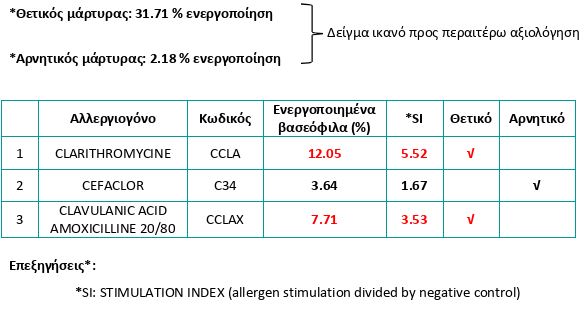
The BAT test report describes:
- Percentage of activated basophils per allergen tested.
- For medicines, results are reported per active substance.
- Depending on the case, personalized recommendations may be provided
The results should be evaluated by an allergist along with the patient’s clinical history.
How does BAT test work?
- Blood Collection: A small sample is taken.
- Exposure to Allergens: Basophils are exposed to allergens in vitro.
- Analysis: Flow cytometry measures activation markers.
- Report: A detailed report is produced.
The in vitro nature of the test eliminates the risk of allergic reactions during the examination.
1) Blood Collection
2) Allergen Exposure
3) Analysis
4) Comprehensive Report


About StArtBio Diagnostic Centers
- Accredited laboratories.
- We specialize in Allergy Diagnosis.
- Regularly used by Allergists.
- Fast and reliable results.
- No appointment required (except for children).
See the allergy tests that are carried out in the specialized laboratory of Startbio.