


DIAGNOSIS OF HEREDITARY A TRYPTASEMIA (HaT – Hereditary alpha-tryptasemia)
What is α-tryptasemia?
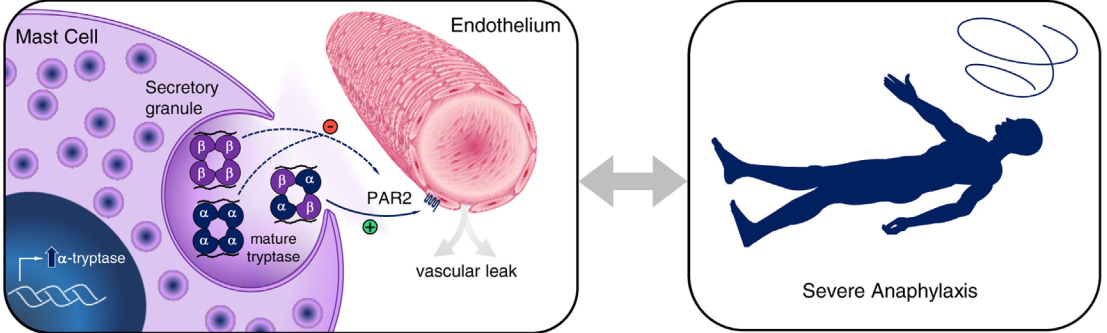
A-tryptasemia is a genetic trait, inherited in an autosomal dominant manner, with an increased number of copies of the TPSAB1 gene, coding for α-tryptase. In this condition, patients present with serum tryptase levels greater than or equal to 8ng/ml, and manifest a wide range of clinical symptoms.
What is tryptase and how is it affected by α-tryptasemia?
Tryptase is a protein secreted by mast cells and basophils. In its mature form, it is an enzymatically active tetrameric serine protease that is stored in mast cell granules and participates in allergic inflammation.
During IgE-mediated immediate hypersensitivity reactions, mast cells are degranulated, resulting in the release of tryptase, along with other mediators that contribute to the symptoms of type I allergic reactions. For this reason, tryptase is considered a suitable biomarker for the diagnosis of anaphylaxis.
On the contrary, the immature form of tryptase, pro-tryptase, is mainly found in the blood serum of healthy individuals as well as in patients with systemic mastocytosis.
When duplications, triplications or even quadruplings of this gene are found, it appears that an excess of pro-tryptase is secreted by mast cells and basophils, resulting in an increase in the patient’s basal serum tryptase, as well as other symptoms.
α-Tryptasemia Symptoms
Both basal serum tryptase levels and severity of clinical symptoms display a gene-dose relationship with TPSAB1. Higher tryptase levels and more severe symptoms occur in the presence of an increased copy number of TPSAB1 encoding α-tryptase.
Although there are patients who may be asymptomatic, the most common symptoms are ,briefly, as follows:
- Elevated serum tryptase (>8ng/ml)
- Gastrointestinal Symptoms / Irritable Bowel Syndrome
- Skin symptoms (Urticaria, angioedema, redness)
- Allergic immediate hypersensitivity reactions to hymenoptera
- Connective tissue abnormalities
- Food intolerance
In addition, increased copies of the TPSAB1 gene have been associated with anaphylaxis in individuals with systemic mastocytosis as well as with severe idiopathic anaphylaxis.
Nevertheless, it is likely that α-tryptasemia modifies the expression of multifactorial allergic diseases rather than directly causing specific pathological phenotypes
Examination process
The diagnosis of α-tryptasemia is made via genetic testing, therefore, all that is required of the patient is a simple blood draw.
Specifically, the number of α and β tryptase coding sequences in the TPSAB1 and TPSB2 genes is examined, and thus the patient’s genotype is determined. Genotypes for the diagnosis of α-Tryptasemia are considered pathological when the number of copies of the TPSAB1 gene is equal to 2 with the coexistence of more than 3 copies for the TPSB2 gene and more than 3 copies of the TPSAB1 gene.
Due to the complexity of the gene structure, the most suitable method for the diagnosis of α-tryptasemia is considered to be digital PCR (dPCR), which is available in our laboratory, and allows for absolute quantification of nucleic acids.